Industry
HR Tech
Type
B2B
Woffu. Time management and employee attendance management platform for companies.

Context
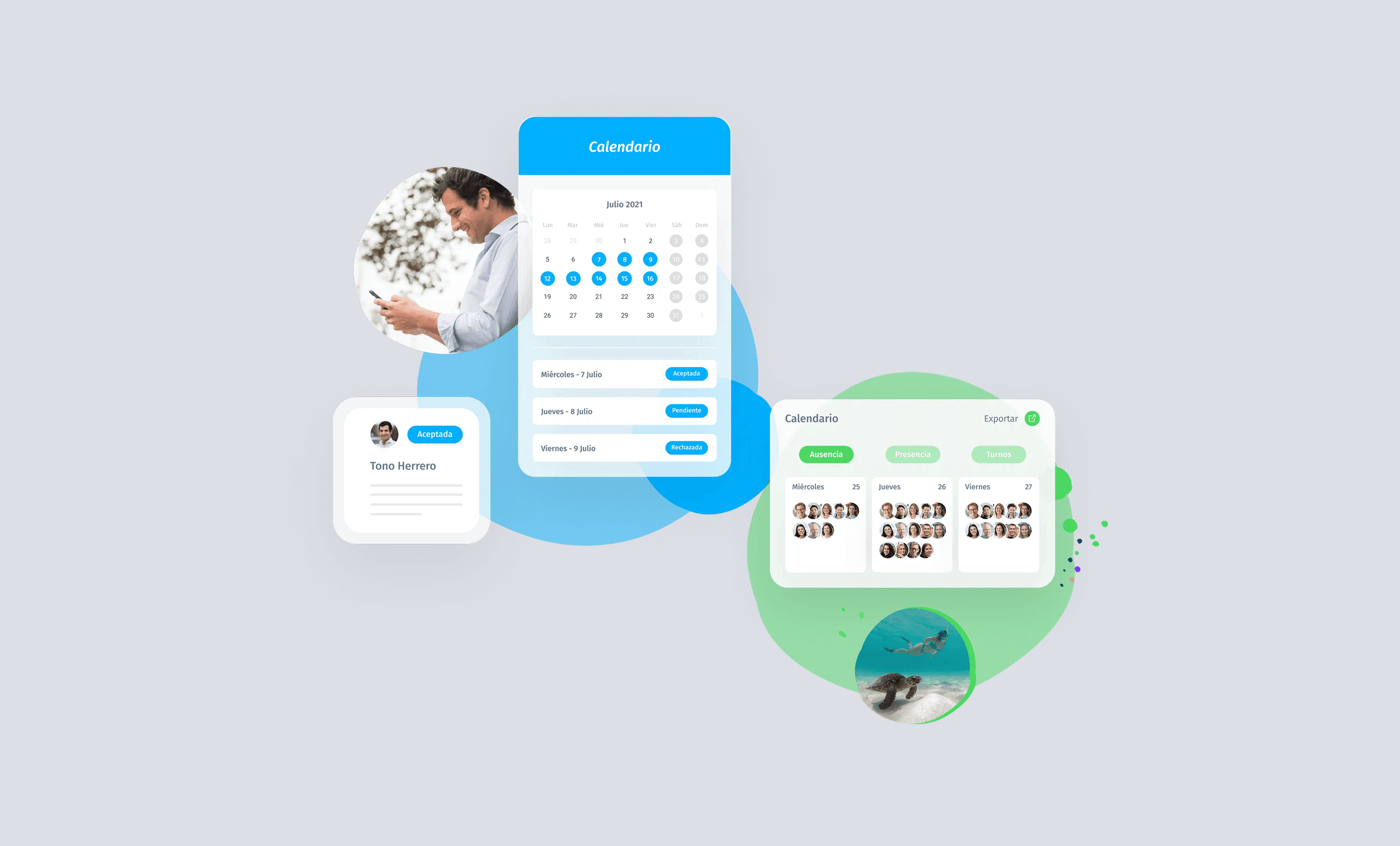
Woffu is a B2B SaaS platform that helps HR teams automate processes, manage employee time tracking, and comply with labor regulations while improving operational efficiency. When I joined the Product Design team, my first challenge was leading the creation of Woffu’s first internal Design System, establishing a consistent and scalable foundation for the product’s evolution. Later, my role expanded into a broader Product Design scope, conducting user research, interviews, surveys, and usability testing to uncover user needs and support the definition and design of new platform capabilities.

Process
The project followed a user-centered design approach, combining research, design system thinking, and iterative validation throughout the product development cycle. 1) Conducted user interviews, surveys, and stakeholder sessions to understand user needs, business requirements, and operational challenges. 2) Performed a usability and UI audit to identify existing interaction patterns, visual inconsistencies, and opportunities to improve the overall user experience. 3) Applied Design System principles to establish a consistent and scalable foundation for the product interface. 4) Translated research insights into product improvements and new features, validating concepts through iterative remote usability testing with real users.


Results & Key Learnings
The implementation of the Design System reduced design and development time, improved visual consistency across the platform, and strengthened collaboration between design and engineering teams. User research initiatives provided a deeper understanding of end-user needs, enabling the team to prioritize and design features that solved real problems and delivered greater value. - A Design System becomes truly valuable when it is adopted as a shared product language across teams. - Continuous user research leads to better product decisions than relying on assumptions. -Consistency improves not only the user experience, but also team efficiency and product scalability. - Successful B2B SaaS products balance business goals with the operational needs of their users.


